Rainwater Tank Installation in Bald Hills
Connecting a rain tank to a toilet or a washing machine's cold tap is regulated plumbing work, so rainwater tank installation in Bald Hills belongs with a licensed plumber. Weather records put the suburb's yearly rainfall near 1,093 mm on average. The low-density housing means most yards have room to catch plenty of it.
If we're late, $100 comes off your bill

- Licensed and InsuredEvery job done by a licensed plumber. QBCC No: 15024607
- Fixed Quote FirstFlat-rate pricing, agreed before any work starts
- Lifetime Labour WarrantyBacked by our Fix-It-or-It's-Free guarantee (T&Cs apply)
- $0 Call-Out FeesNo extra charge for nights, weekends or public holidays
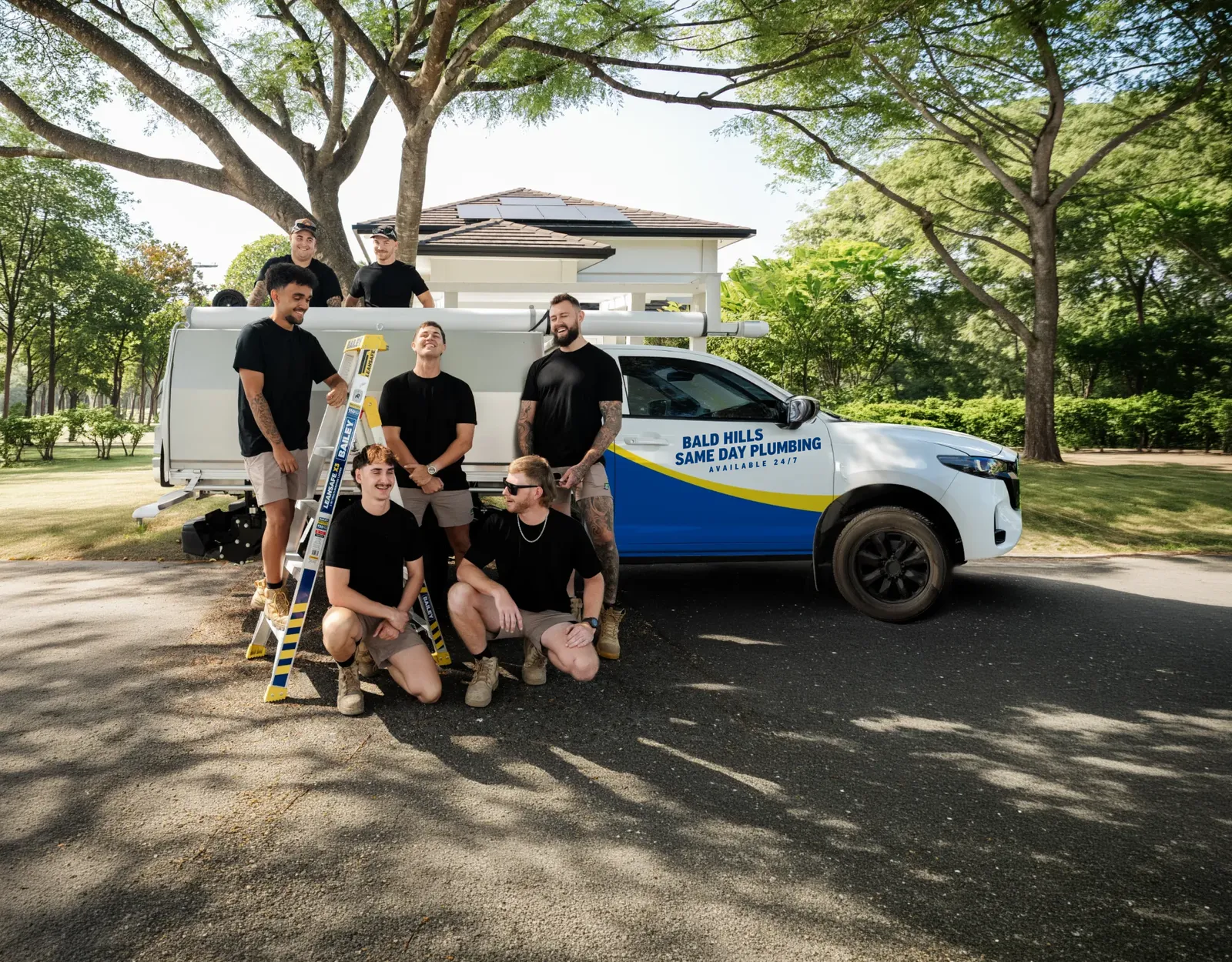
Our Bald Hills crew plans the tank-to-house pipework, fits the diverters and mesh, and handles the approvals. Tanks sit on the supply side of the plumbing, so burst mains and hidden leaks stay with our water pipe repairs and leak detection teams.

Parts of a Tank Plumbing System
The water runs one path. Rain washes off the roof, a first-flush device tips out the opening flow, mesh guards the inlet, and a plumbed outlet feeds the toilets, the laundry cold tap and the garden. A licensed plumber makes that outlet connection.
Each part does one job:
The roof catchment
rain carries whatever sits up there, from leaf litter to grit.
The first-flush device
it dumps the dirtiest first wash so roof debris never reaches the stored water.
The mesh and flap valves
mosquito-proof guards on every opening, overflow pipes included.
The outlet line
the pipework a licensed plumber runs to the cistern and the washing machine.
Tank Water and the Drinking Water Rule
Flushing toilets, washing clothes in cold water and watering gardens and lawns are all fine on untreated tank rain, because those jobs generally carry a low disease risk. Drinking, cooking and personal hygiene belong on town water, the safest and most reliable supply. Tank rain becomes a drinking option only where no town supply exists.
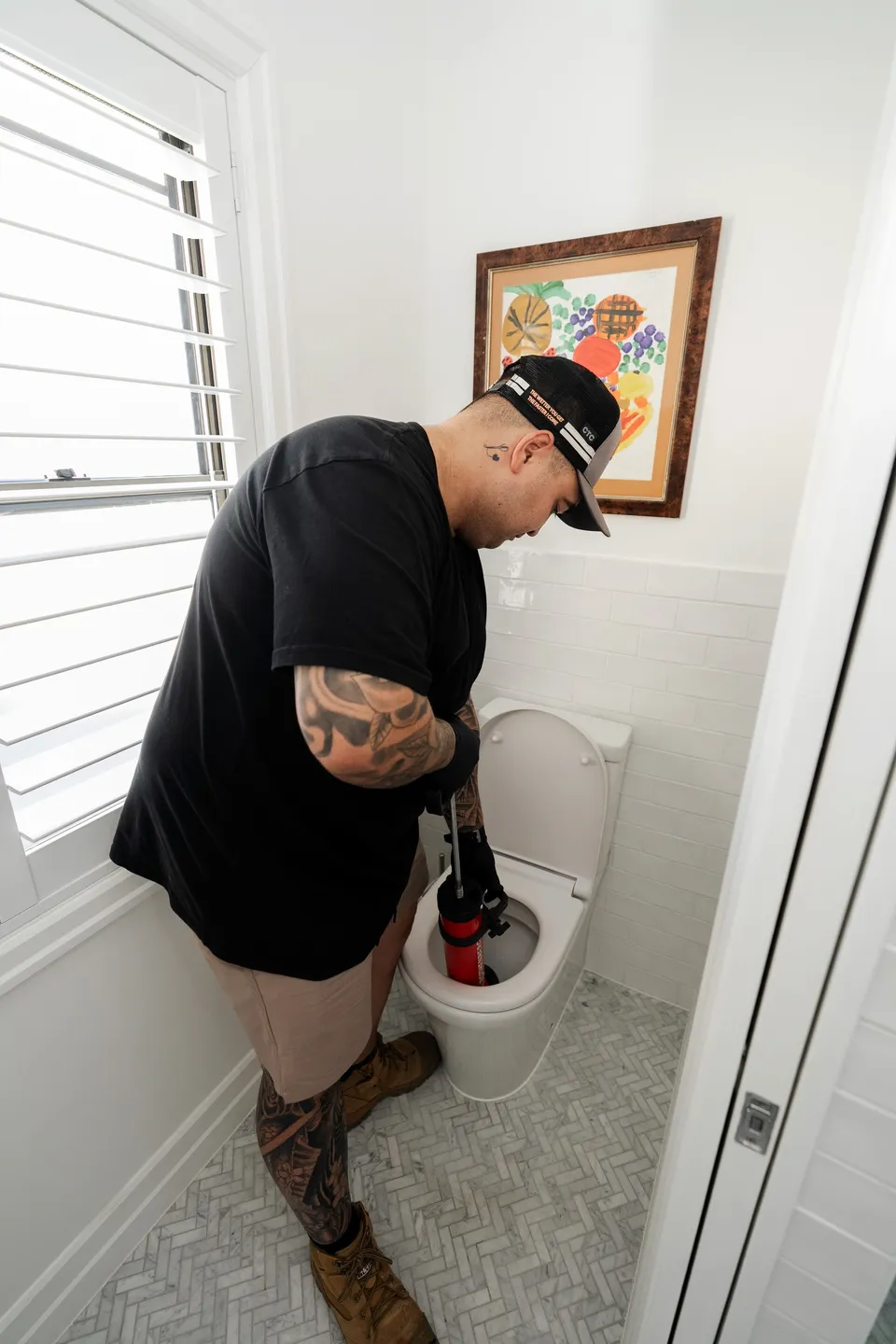
That rule shapes the plumbing. A tank-to-toilet connection saves town water on every flush, and the laundry runs on rain instead. Family households here do plenty of washing, so the cold tap earns its keep.
Filtered drinking water at the kitchen sink is a different setup, and our water filter installation page covers it.
Council Rules for Tanks in Bald Hills
Your first move is a call to the council, because tanks pass through its building and plumbing approval processes. A Brisbane home can need planning, plumbing and building approval, depending on the block, the tank's size and where it sits. Bushfire overlay rules and extra conditions for tanks connected indoors may also apply.
Generous lots are the norm here, from the yards near the Guide Dogs Queensland breeding and training centre to the older homes off Kluver Street. Bush wraps the built-up edge, so raise the tank's position with the council early. At the last census, 93.8 per cent of Bald Hills homes were separate houses, so most blocks have space to site a tank sensibly.
Keeping a Tank Mosquito-Proof and Clean
Three intervals run the upkeep: clean the first-flush device every 3 months, check the mesh, flap valves, roof debris and animal entry every 6 months, and look for sludge on a two-to-three-year cycle. Brisbane also asks owners to open and clean the first-flush gear after rain, and a tank left unmeshed risks an on-the-spot fine of up to 3 penalty units.
The routine breaks down like this:
Every 3 months
check the diverter and clean it, then repeat after any decent rain.
Every 6 months
inspect the tank, the mesh and the flap valves for rips or holes, and repair defects straight away.
Every 6 months, roof and animals
clear built-up leaves and plant debris, prune overhanging branches, and close any spot where birds or insects get in.
Sludge
on the two-to-three-year cycle, check inside the tank, then siphon the sludge out or empty the tank.
Brisbane mesh specs call for stainless steel or aluminium with gaps under one millimetre, fitted firm but removable for cleaning. Storm-season humidity between the bush and the river flats gives mosquitoes every reason to move in, so the guards matter.
How a Tank Installation Runs
- 1

Get in touch
Call (07) 3523 6417 or send a quick message about the job in Bald Hills, and we'll ask what we need to know.
- 2

We plan the tank connections
We check where the tank sits on the block, run the outlet line to the cistern and the laundry, then fit the first-flush gear and the mosquito mesh, and lodge whatever the council needs.
- 3
Sign off the quote
You'll see a fixed quote before any work starts, with flat-rate pricing and no hidden fees. The job starts when you're happy with it.
- 4

Pay once it's done
Pay by card or EFTPOS on site after the work's finished, or choose Fix now, pay later.
Plumbing job in Bald Hills?
$0 call-out fees, available 24/7, and same-day where we can.
Rainwater Tank Questions From Bald Hills
Call (07) 3523 6417Do I need council approval for a rainwater tank in Bald Hills?
Yes, usually. Which approvals apply depends on the block, the tank's size and its position, because a Brisbane home can need planning, plumbing and building approval. Bushfire overlay rules and extra conditions for tanks plumbed indoors may also apply, so ring the council before you buy.
What can I use rainwater from my tank for?
Toilets, the laundry cold tap and the garden all run happily on untreated tank rain, since those jobs carry a low disease risk generally. Save drinking, cooking and showers for town water, the safest and most reliable supply; tank rain is a drinking option only where no town supply exists.
How often should I clean the first flush diverter on my Bald Hills tank?
Every 3 months, and after each decent rain as well, because Brisbane asks owners to open first-flush devices and clean them out once the sky clears. The diverter tips out the opening flow off the roof, so a clogged one lets leaf litter and grit into the tank.
How much upkeep does a rainwater tank need?
Three intervals: the diverter every 3 months, the tank, mesh and flap valves every 6 months, and sludge every two to three years. Any plumbing work a tank needs is priced on access, pipe runs and fittings, and a fixed quote comes before any work starts.
Does a rainwater tank need mosquito screens?
Yes. Every opening of a new tank needs a mosquito-proof screen or flap valve, overflow pipes included. Brisbane specs call for stainless steel or aluminium mesh with gaps under one millimetre, firm but removable for cleaning, and a tank left unmeshed can draw an on-the-spot fine of up to 3 penalty units.

Ring Us About a TankWe'll call you back.
Ring (07) 3523 6417 and tell us what's wrong. You get $0 call-out fees, a fixed quote before any work starts and same-day where we can, 7 days a week.
To claim your $0 call-out fee, call (07) 3523 6417 today.